Trenchless Sewer Line Replacement in Denver: How It Works and When It's an Option
Most Denver homeowners don't find out their sewer line is failing until raw sewage backs up into the basement. By that point, the damage is done — and the clock is ticking. The good news is that fixing the line doesn't always mean tearing up your yard.
Trenchless sewer line replacement in Denver has changed the way we handle broken, cracked, and root-invaded pipes. We can repair or replace a sewer line with little to no excavation. No destroyed landscaping. No driveway jackhammered apart. Just a clean fix that lasts.

At Colorado Water Works, we've been solving sewer problems across the Denver metro for years. We know which methods hold up in local soil conditions, and we know how to tell you the truth about what your pipe actually needs. This page walks you through how trenchless replacement works, what damage it can fix, and what the process looks like start to finish. By the end, you'll know the right questions to ask before you call anyone for a quote.
How Does Trenchless Sewer Line Replacement Work in Denver?
Trenchless sewer line replacement repairs or replaces a broken sewer line without digging up your yard. In Denver, two methods are most common:
- Pipe lining (CIPP): A flexible liner coated in epoxy resin is inserted into the damaged pipe. It inflates, then hardens — forming a smooth new pipe inside the old one.
- Pipe bursting: A bursting head is pulled through the old pipe, breaking it apart while pulling a new pipe into place behind it.
Both methods need only one or two small access points. Most jobs wrap up in a single day. Trenchless is a strong option when a pipe is cracked, corroded, or root-damaged but still intact enough to act as a guide for the new liner or replacement pipe.
Learn more about trenchless sewer line replacement in Denver.
What Is Trenchless Sewer Line Replacement?
Trenchless sewer line replacement fixes or replaces underground sewer pipes without large-scale digging. The old approach — dig a trench the full length of the broken line, pull out the old pipe, drop in new pipe — can take several days and leave your yard looking like a construction site. Trenchless trenchless pipe repair in Denver skips most of that.
The technology has been around since the 1970s and 80s. It's now widely used across Denver neighborhoods, from older homes in the Highlands to newer builds further out in Arvada or Littleton. The method was built for homeowners dealing with aging pipes, root intrusion, or corrosion — situations where the pipe itself needs help but the ground around it doesn't have to pay the price.

Before we recommend any trenchless method, we always start with a video camera inspection. We run a camera through the line to see exactly what we're working with. And that first look usually tells us everything — the type of damage, the location, and whether the pipe can guide a liner or a bursting head. In our experience serving Denver's older neighborhoods, most homeowners are surprised to learn the job is often done in a single day.
| Traditional Excavation | Trenchless Repair | |
|---|---|---|
| Timeline | 2-5 days | 1 day (most jobs) |
| Surface Disruption | High - full trench dug | Low - 1-2 small access points |
| Restoration Needed | Yes - landscaping, concrete, pavement | Minimal |
| Repaired Pipe Lifespan | Depends on pipe material | 50+ years with CIPP lining |
| Cost | Higher when restoration is included | Often comparable or less |
The Two Main Trenchless Methods Explained
Not every trenchless job uses the same method. Two approaches cover most situations: pipe lining and pipe bursting. Knowing the difference helps you understand what your contractor is recommending — and why.
Pipe Lining (CIPP)
Cured-in-place pipe lining — CIPP — works by inserting a flexible liner saturated with epoxy resin into the damaged pipe. The liner is inflated against the walls of the old pipe and left to cure. Once it hardens, you have a smooth, seamless new pipe inside the old one. The old pipe becomes the sleeve. CIPP lining is well-suited for pipes with cracks, small holes, or root damage where the pipe still holds its basic shape. A properly installed CIPP liner can extend pipe life by 50 or more years.
Pipe Bursting
Pipe bursting takes a different approach. A bursting head is pulled through the existing pipe, fracturing it outward while a new pipe is pulled into place right behind it. So the old pipe is destroyed — but a new one replaces it at the same time. This method works well when the damage is more severe, or when you want to upsize the pipe diameter. We used pipe bursting recently on a 1960s clay line in the Washington Park area where root intrusion had fully collapsed a four-foot section. Lining wasn't an option. Bursting got the job done without opening up the yard.
Best candidates for pipe lining (CIPP):
- Hairline cracks or small fractures
- Root infiltration with pipe shape intact
- Corrosion inside the pipe
- Joints with minor separation
Best candidates for pipe bursting:
- Severely root-damaged or partially collapsed sections
- Old clay or cast iron pipe that needs full replacement
- Cases where a larger pipe diameter is needed
Signs Your Denver Sewer Line May Need Replacement
Sewer lines don't usually fail overnight. They give signals — but most homeowners don't connect the dots until things get bad. Here are the warning signs worth paying attention to.
5 Warning Signs Your Sewer Line May Be Failing
- Slow drains throughout the house — Not just one sink or tub. When multiple fixtures drain slowly, the problem is usually deeper in the main line.
- Gurgling sounds from toilets or drains — That noise means air is getting trapped where it shouldn't be. It points to a blockage or break in the line.
- Wet or unusually lush patches in the yard — A leaking sewer line feeds the soil above it. A suspiciously green strip of grass in a dry spell is a red flag.
- Foul odors near the foundation or in the basement — Sewer gas escaping through a crack in the line finds its way in. It's more than unpleasant — it can be a health issue.
- Your home was built before 1980 — Denver homes from that era were commonly built with clay or cast iron sewer pipes. Both materials break down over time, and many of those lines are now past their expected lifespan.
But spotting these signs is just step one. The next step is figuring out whether the damage is something trenchless can fix — or not.
Denver trenchless sewer line replacement — see if your home qualifies
When Is Trenchless an Option — and When Is It Not?
Trenchless methods work well — but they don't work for every situation. Knowing the limits upfront saves everyone time.
Trenchless works when the pipe:
- Has cracks, fractures, or corrosion but still holds its shape
- Has root intrusion that hasn't fully closed or collapsed the line
- Is old clay or cast iron that's degrading but still intact enough to guide a liner or bursting head
Trenchless may not work when:
- The pipe has fully collapsed — there's no shape left for a liner to follow or a bursting head to track
- Joints are severely misaligned or offset
- The line has a belly (a sag section) where waste pools instead of flowing out
Denver's soil makes this more complicated. The Front Range sits on expansive clay — soil that swells when wet and shrinks when dry. Add in freeze-thaw cycles from cold winters, and underground pipes take real stress year over year. That soil movement is often what causes belly sections and joint separation. It's a local factor that matters when assessing whether your line can handle a trenchless repair.
| Pipe Condition | Trenchless Viable? |
|---|---|
| Hairline cracks or fractures | Yes - good candidate for CIPP lining |
| Root intrusion, pipe shape intact | Yes - lining or bursting depending on severity |
| Partial collapse | Possibly - depends on extent; camera inspection required |
| Full collapse | No - traditional excavation needed |
| Belly / sag section | No - trenchless won't correct grade issues |
| Severely misaligned joints | No - excavation and realignment required |
We always recommend starting with a sewer scope. It's the only way to know what method — if any — will hold long-term in Denver's soil. One thing we see constantly on Denver calls is homeowners who were told over the phone they'd need full excavation. We get in there with a camera and find a line that's a clean CIPP candidate. The inspection always comes first.
What to Expect From the Trenchless Process in Denver
If it sounds like trenchless could work for your home, here's how the process goes — from the first call to the final check.
Step-by-Step: Trenchless Sewer Line Replacement
- Camera inspection — We run a camera through your sewer line to map its path, locate the damage, and assess what we're working with. No guessing.
- Method recommendation — Based on what we find, we tell you whether pipe lining, pipe bursting, or traditional repair makes the most sense. You get a straight answer.
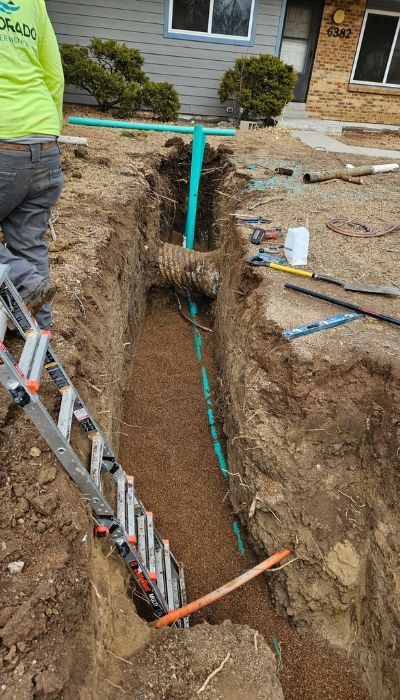
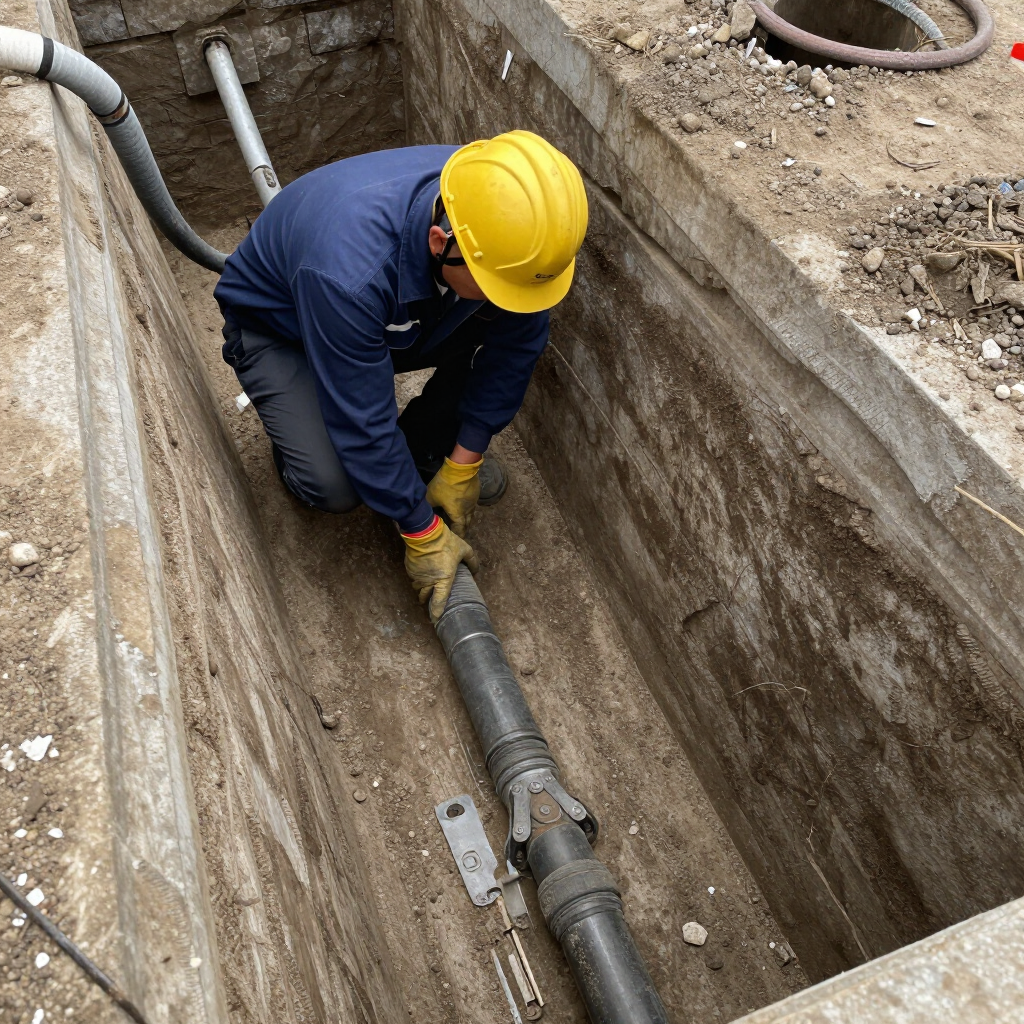
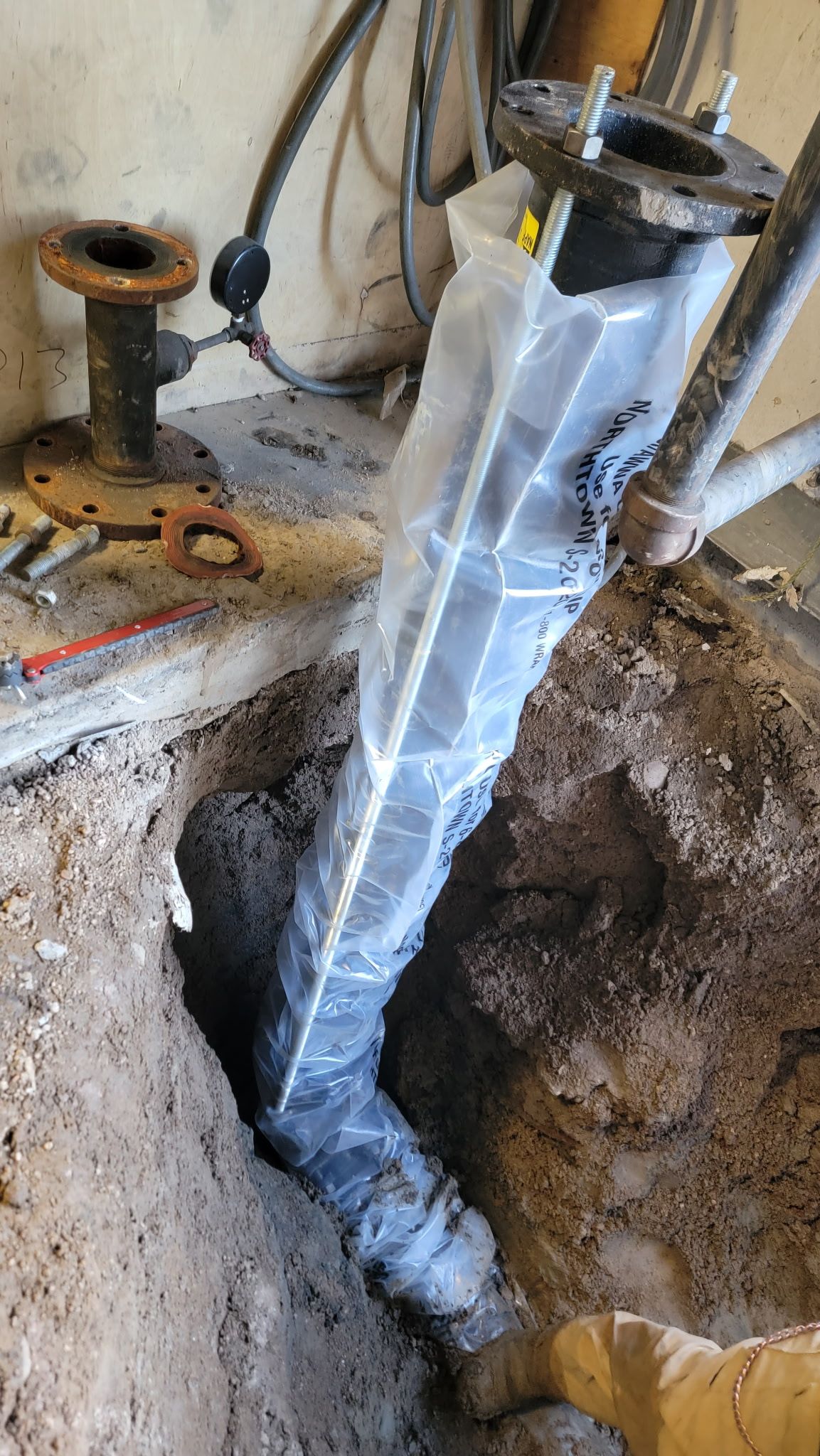
- Access points excavated — We dig one or two small holes at the entry and exit points of the repair. That's it. No trench running the length of your yard.
- Liner inserted or new pipe pulled through — For CIPP, the liner is set, inflated, and left to cure. For pipe bursting, the new pipe is pulled into place as the old one is broken apart.
- Final camera inspection — We run the camera through again to confirm the repair is clean, the pipe is clear, and everything flows the way it should.
Most residential jobs are done in a single day. The cost is often comparable to full excavation once you account for the restoration work excavation requires — landscaping, concrete, pavement. Trenchless removes most of that. So the final bill tends to be in the same range, or lower, without the mess.
So when you're comparing quotes, ask each contractor whether their price includes surface restoration. That's where the real difference shows up.
Learn more about trenchless sewer line replacement in Denver
Colorado Water Works
Phone: (720) 320-6981
Serving Englewood and the Denver Metro
Recent Posts