How to Repair a Sewer Line Without Digging: Trenchless Options for Denver Homes
Your Denver backyard took months to finish — new sod, fresh landscaping, maybe a concrete patio. Then your sewer backs up. The old fix would mean a crew tearing up everything you just paid for. But that's not the only option anymore.
At Colorado Water Works, we hold Master Plumber License #0004643 and are BBB Accredited. We've handled trenchless sewer repair in Denver CO across dozens of older neighborhoods where traditional digging would have caused serious damage. This guide covers every no-dig method available to Denver homeowners so you can make a smart call before you pick up the phone.
We'll walk through the two main trenchless methods, when each one works, what to expect on cost, and how to find a contractor you can trust. By the end, you'll know exactly what to ask for.
How Do You Repair a Sewer Line Without Digging?
Trenchless sewer repair fixes a damaged pipe from the inside — or replaces it underground — without digging a trench across your yard.
There are two main methods:
- Pipe lining (CIPP): A flexible liner coated in epoxy resin is inserted into the damaged pipe and cured in place, forming a new pipe within the old one.
- Pipe bursting: A bursting head is pulled through the old pipe, breaking it apart while a new pipe is pulled in behind it.
Both methods work on most residential sewer lines and protect your yard, driveway, and landscaping from damage.
What Does "Trenchless" Sewer Repair Actually Mean?
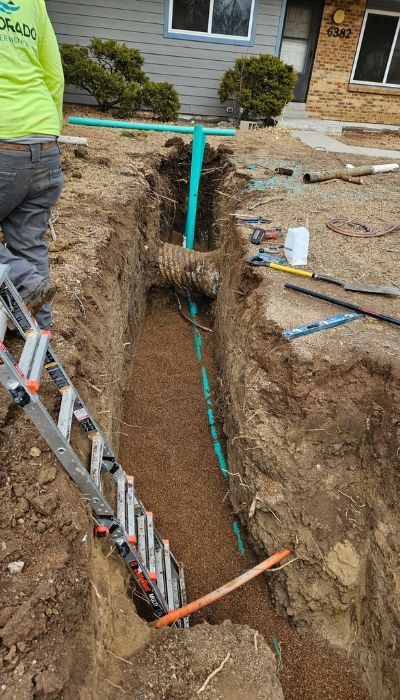
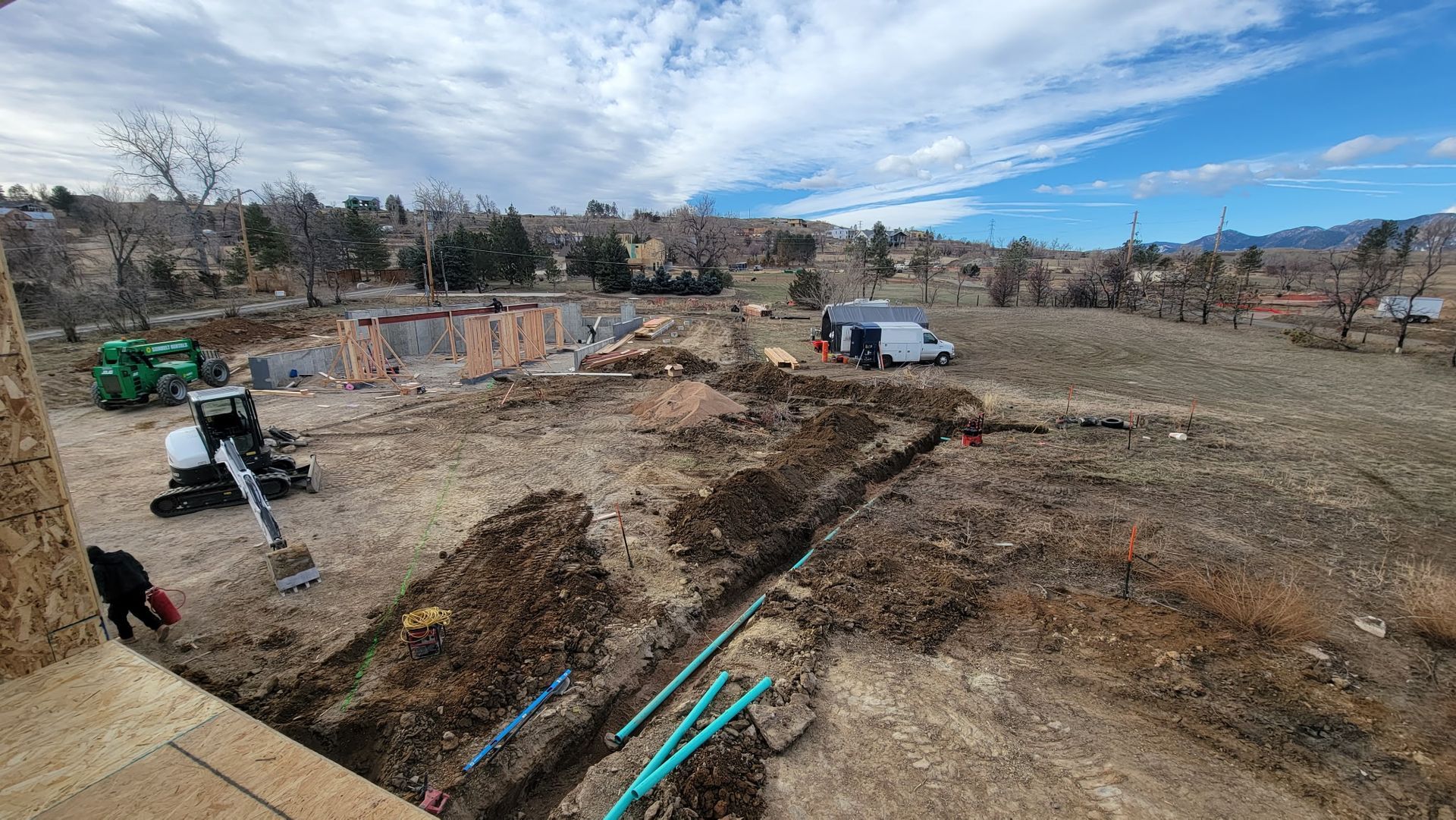
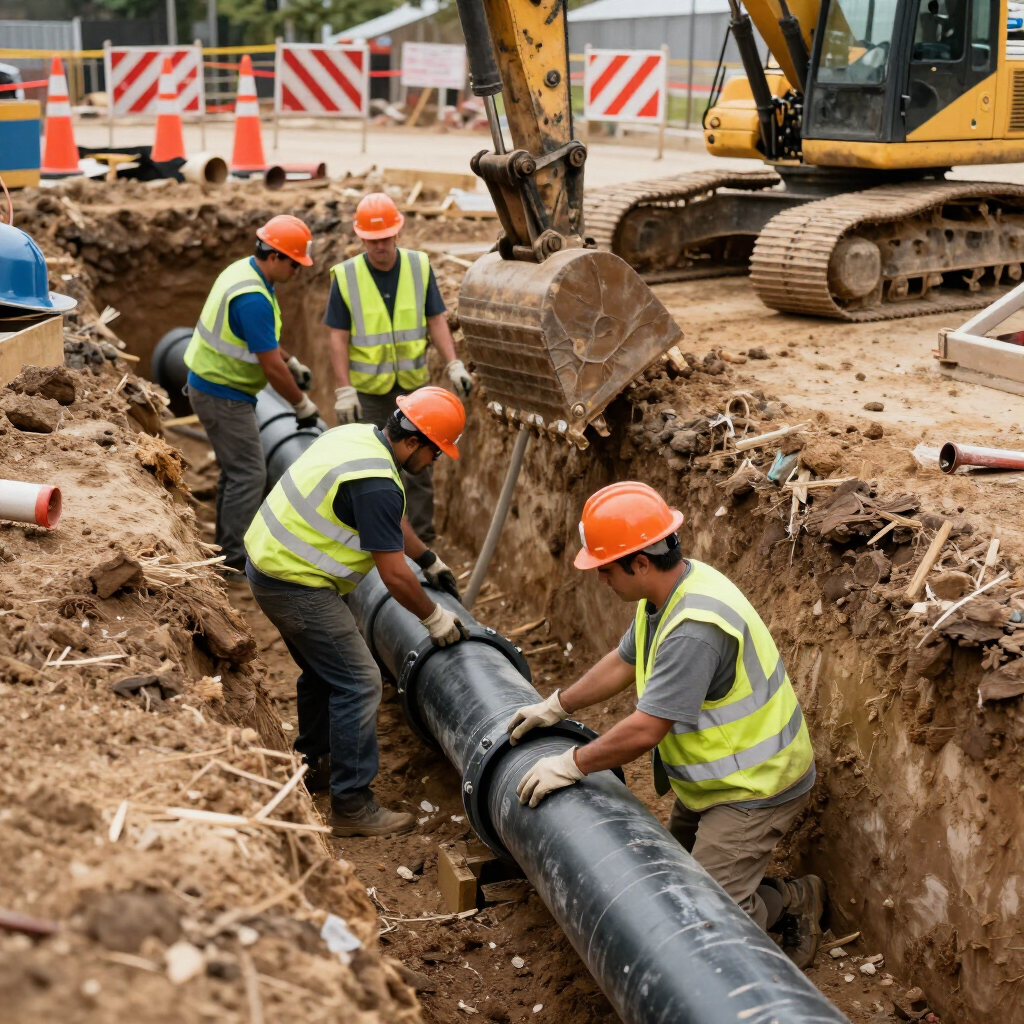
Trenchless repair means fixing or replacing a sewer line without digging a long open trench from your house to the street. Traditional open-cut work requires excavating down to the pipe along its full length — tearing up grass, concrete, driveways, or anything above it.
Trenchless methods work differently. A crew accesses the pipe from one or two small entry points. The repair happens from inside the pipe or by pulling a new pipe through underground. Your yard stays mostly intact.
Here's the short version of how they compare at a glance:
- Traditional open-cut: Full trench dug along the pipe, landscape removed, backfilled and restored after
- Trenchless: One or two small access points, no long trench, repair or replacement done underground
Trenchless technology has been around for decades in large cities. It's now standard practice for local Denver contractors — including jobs in residential neighborhoods where digging would mean cutting through driveways, fences, or finished yards.
Before any trenchless job, we run a camera inspection through the line. The camera tells us exactly what we're dealing with — where the damage is, what the pipe is made of, and whether trenchless is the right call for that specific line.
What Factors Change the Price of Toilet Repair in Denver and Englewood
Now that you know what trenchless means, let's look at the two specific methods most Denver plumbers use.
Pipe Lining (CIPP)
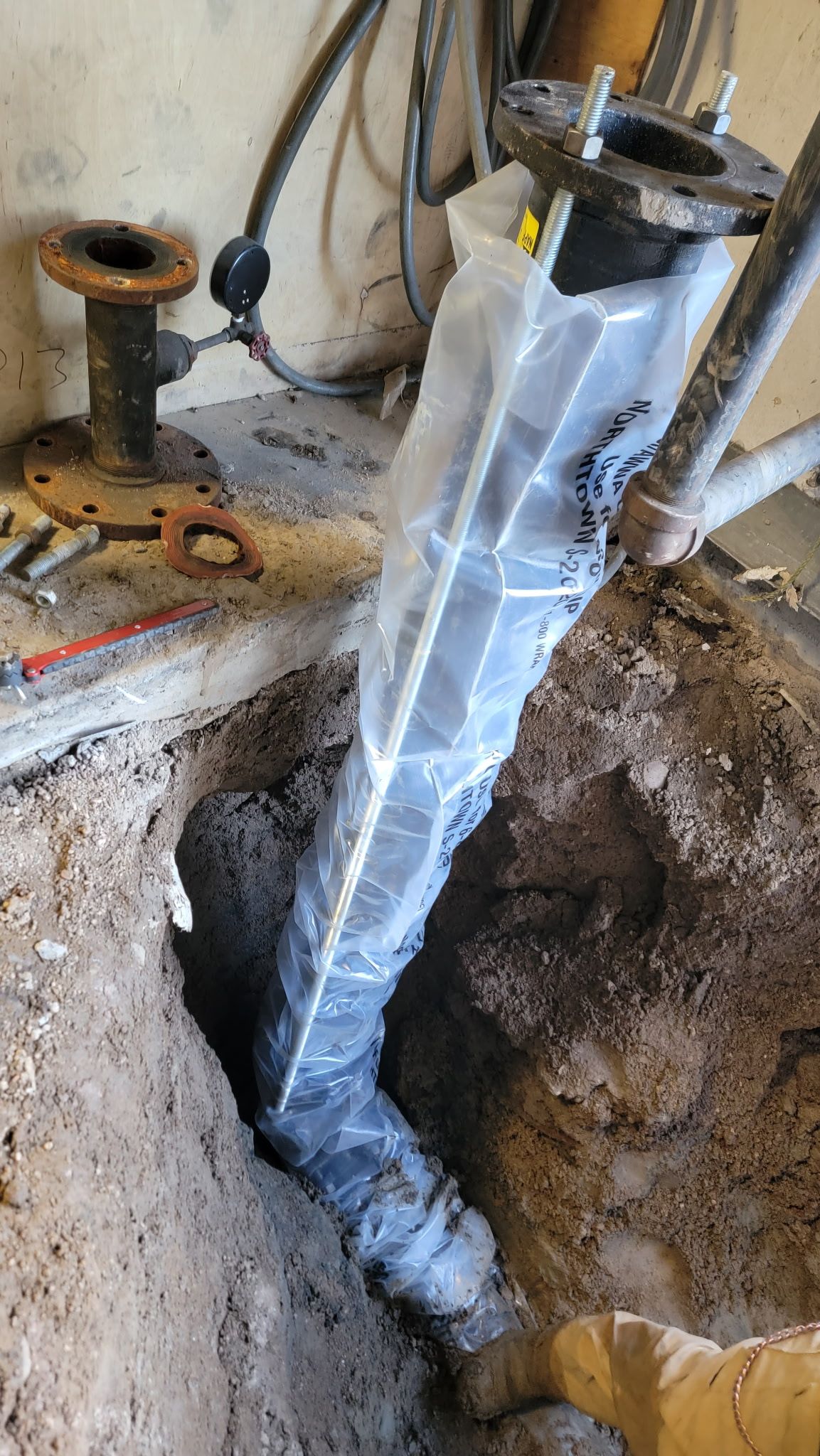
CIPP stands for cured-in-place pipe lining. A felt or fiberglass liner is saturated with epoxy resin, then pulled or inverted into the existing pipe. Heat, steam, or UV light cures the resin. The result is a hard, smooth new pipe formed inside the old one.
CIPP works well on pipes with cracks, root intrusion, or corrosion — as long as the pipe hasn't fully collapsed. When properly installed, a CIPP liner can last 50 years or more.
Pipe Bursting
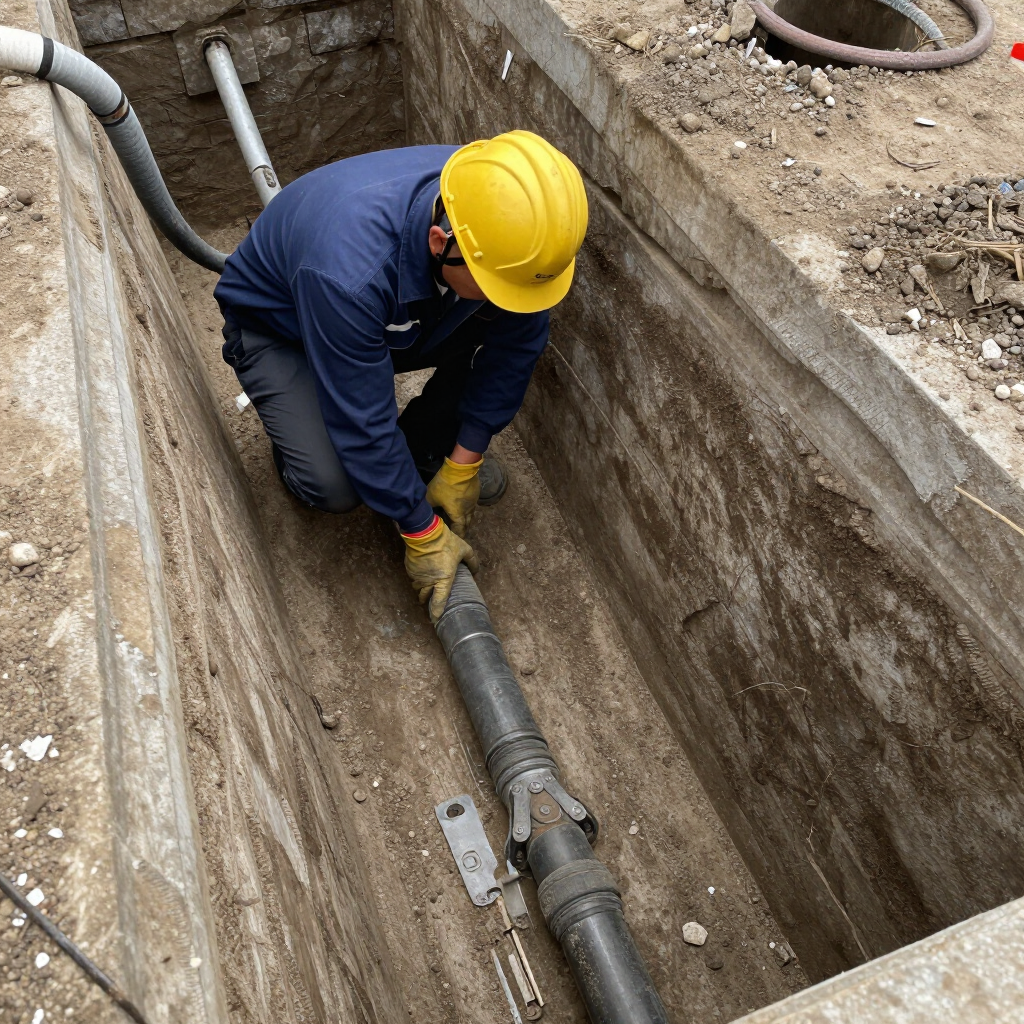
Pipe bursting is used when the existing pipe is too far gone to line. A steel bursting head is pulled through the old pipe by a hydraulic machine at the exit point. As it moves through, it breaks the old pipe outward into the surrounding soil. A new HDPE pipe is attached to the back of the bursting head and pulled into place as the old pipe breaks apart.
HDPE is flexible, resistant to root intrusion, and built to last. So pipe bursting doesn't just repair the old line — it replaces it entirely.
Method Comparison
| Pipe Lining (CIPP) | Pipe Bursting | |
|---|---|---|
| How it works | Liner cured inside old pipe | Old pipe broken, new pipe pulled in |
| Best for | Cracks, root intrusion, corrosion | Collapsed or severely deteriorated pipe |
| New pipe size | Same or slightly reduced diameter | Same or larger diameter |
| Lifespan | 50+ years | 50+ years (new HDPE pipe) |
| Access points needed | 1-2 | 2 (entry and exit) |
On a job in Washington Park, we found a collapsed clay pipe that couldn't hold a liner. Pipe bursting was the only real option — and the homeowner kept their entire backyard intact.
Is Your Denver Home a Good Candidate for Trenchless Repair?
Not every sewer line qualifies for trenchless work. But most do. Here's what determines it.
Compatible Pipe Materials
Trenchless methods work on most common residential pipe materials:
- Clay (very common in older Denver homes)
- Cast iron
- PVC
- Orangeburg (a fiber-tar pipe found in mid-century homes)
Pipe Diameter
Most residential sewer lines run between 4 and 6 inches in diameter — right in the range where trenchless methods work well. Larger lines are also compatible.
Conditions That May Rule Out Trenchless
Some situations make trenchless difficult or impossible:
- A pipe that has fully collapsed with no remaining structure to guide a liner or bursting head
- Severely offset joints where pipe sections have shifted far out of alignment
- Multiple sharp bends that block liner insertion
A camera inspection catches all of this before any work starts. That's what protects you from a surprise mid-job.
The Denver Context
Many Denver neighborhoods — Capitol Hill, Highlands, Wash Park, Curtis Park — were built in the early to mid-1900s. The sewer lines under these homes are often original clay pipe. Clay holds up for decades, but it's brittle. Denver's expansive soils shift with moisture changes, and that movement puts stress on old clay lines over time.
What we see constantly on Denver calls to older neighborhoods is clay pipe that's cracked along the barrel or separated at the joints — not from neglect, but just from years of soil movement and freeze-thaw cycles working on a line that was never designed to flex. That's exactly the scenario where pipe lining works cleanly and quickly.
Not sure if your home qualifies? Get a camera inspection from our Denver team — sewer line repair Denver CO
How Much Does Trenchless Sewer Repair Cost in Denver?
If your home looks like a good fit, the next question is almost always the same: what's this going to cost?
The honest answer is that price varies — by pipe length, pipe depth, access conditions, and the method used. But here are the general ranges Denver homeowners typically see:
| Pipe Lining (CIPP) | Pipe Bursting | |
|---|---|---|
| How it works | Liner cured inside old pipe | Old pipe broken, new pipe pulled in |
| Best for | Cracks, root intrusion, corrosion | Collapsed or severely deteriorated pipe |
| New pipe size | Same or slightly reduced diameter | Same or larger diameter |
| Lifespan | 50+ years | 50+ years (new HDPE pipe) |
| Access points needed | 1-2 | 2 (entry and exit) |
Ranges are general estimates. Get a written quote after a camera inspection for your specific line.
Why Trenchless Often Costs Less Overall
Traditional excavation looks cheaper at first glance. But that number doesn't include what comes after — hauling away excavated soil, replacing concrete, reseeding or resodding your yard, repairing fencing or hardscaping. Add those in and trenchless usually comes out ahead on total project cost.
What Affects Your Price
- Pipe length: Longer lines cost more to line or burst
- Depth: Deeper pipes require more labor and equipment
- Access: Tight access points or restricted yards add time
- Material: The liner resin and HDPE pipe are priced by the foot
The best way to get an accurate number is a camera inspection first. It tells us exactly what we're working with — and it keeps you from getting a quote that changes once a crew opens the ground.
Trenchless vs. Traditional Sewer Repair: Which Is Right for Denver Homes?
Once you've decided to address the problem, you may still wonder which approach makes more sense. Here's a straight comparison.
Side-by-Side
| Trenchless | Traditional Open-Cut | |
|---|---|---|
| Disruption | Minimal - small access points only | High - full trench across the pipe run |
| Landscape impact | Little to none | Turf, concrete, and hardscaping removed |
| Timeline | 1-2 days typical | 3-5 days or more, plus restoration time |
| Upfront cost | Moderate | Moderate to high |
| Total cost (with restoration) | Lower overall | Higher when restoration is included |
| Lifespan | 50+ years | 50+ years (new pipe) |
| Permit required? | Usually not | Often yes - especially near public right-of-way |
The Denver Permit Factor
Open-cut excavation near a public sidewalk or street in Denver typically requires a permit from Denver Public Works. That adds time and cost before any digging starts. Trenchless repairs inside your property line usually don't trigger the same requirement — though your contractor should always confirm based on your specific address and scope of work.
When Traditional Excavation Still Makes Sense
And sometimes, digging is the right call. If the pipe has fully collapsed over a long section, if there are severe joint offsets that block liner insertion, or if the line layout makes trenchless access impractical, open-cut work gets the job done more cleanly. A good contractor will tell you which one applies to your situation — not just push the method they prefer.
How to Find a Trusted Trenchless Sewer Repair Contractor in Denver
Once you've decided trenchless is the right path, the last step is finding someone in Denver you can actually trust to do it.
What to Look For
- Licensed and insured: In Colorado, sewer and plumbing work requires a state license. Ask for the license number before anyone touches your line. Ours is Master Plumber License #0004643.
- Camera inspection before quoting: Any contractor who quotes you a price without running a camera first is guessing. That guess usually benefits them, not you.
- Written estimate: Get the scope of work and price in writing before you approve anything.
Questions to Ask Before Hiring
- Do you pull a camera inspection before you quote?
- What method are you recommending, and why?
- What warranty do you provide on the liner or new pipe?
- Are you licensed and insured in Colorado?
- Will this work require a permit, and if so, who pulls it?
Red Flags to Avoid
- Pressure to start immediately without an inspection
- No written quote or vague verbal estimates
- Pushing open-cut work without explaining why trenchless won't work
- No license number when you ask
How to Use Google to Verify a Contractor
Pull up their Google Business Profile. Look at the photo section — do they show actual job photos, or just stock images? Check the Q&A section to see how they respond to questions. Read the one-star reviews as carefully as the five-star ones. A contractor who responds professionally to complaints is worth more than one with a perfect score and no reviews.
What We Do on a First Visit
When Colorado Water Works shows up for an initial assessment, we run a camera through your sewer line before we quote anything. We'll show you the footage, tell you exactly what we found, and give you a written recommendation with the method and price laid out clearly. No pressure. You decide what happens next.
Ready to fix your sewer line without tearing up your yard? Visit our
Denver CO sewer line repair
page to schedule your free assessment.
Frequently Asked Questions
What is trenchless sewer repair and how does it work?
Trenchless sewer repair fixes or replaces a damaged pipe without digging a long open trench. A crew accesses the pipe from one or two small entry points and either lines the inside of the existing pipe with an epoxy-cured liner (CIPP) or pulls a new pipe through while breaking the old one apart (pipe bursting). Your lawn, driveway, and landscaping stay mostly intact.
How long does trenchless sewer repair last?
A properly installed CIPP liner or new HDPE pipe from a pipe bursting job can last 50 years or more. The material doesn't rust, resists root intrusion, and holds up well against soil movement — which matters in Denver where expansive clay soils shift with moisture and freeze-thaw cycles.
Can you do trenchless sewer repair on an old clay pipe?
Yes — and clay pipe is actually one of the most common materials we work on in older Denver neighborhoods. As long as the pipe hasn't fully collapsed, CIPP lining bonds well to clay and seals cracked sections and separated joints cleanly. A camera inspection confirms whether the pipe is a good candidate before we start.
Does trenchless sewer repair require a permit in Denver?
It depends on the scope and location of the work. Repairs inside your property line that don't involve disturbing a public right-of-way typically don't require a permit. Work near the street or sidewalk may trigger a Denver Public Works permit requirement. Your contractor should check and handle this before the job starts.
How do I know if I need pipe lining or pipe bursting?
A camera inspection tells you which method is right. Pipe lining works when the existing pipe still has enough structure to hold a liner — cracks, root intrusion, and corrosion are good candidates. Pipe bursting is used when the pipe has collapsed or deteriorated beyond what a liner can address. We walk you through the camera footage so you understand exactly what we found and why we're recommending one method over the other.
How much does trenchless sewer repair cost in Denver?
Pipe lining in Denver typically runs between $5,000 and $8,000. Pipe bursting ranges from $6,000 to $10,000. Those ranges shift based on pipe length, depth, and access conditions. Traditional open-cut repair often costs more once you add landscape restoration back in. Get a camera inspection first — that's what produces an accurate quote rather than a range.
Colorado Water Works
Phone: (720) 320-6981
Serving Englewood and the Denver Metro