Does Homeowners Insurance Cover Sewer Line Replacement in Denver?

July 13, 2026

Share this article

Your sewer line backs up on a Saturday night. By Monday, you have a quote for thousands of dollars in repairs. The first thing most Denver homeowners want to know: will insurance cover this?


The short answer is — probably not. Standard homeowners policies have narrow rules about what sewer damage qualifies. And Denver adds its own complications: aging pipes, shifting soil, and freeze-thaw cycles that wear lines down long before they fail. Does homeowners insurance cover sewer line replacement in Denver? This page gives you a straight answer on what your policy likely covers, what it almost certainly doesn't, and what your real options are when insurance falls short.


We're Colorado Water Works. We work on sewer lines across the Denver metro every week — from Capitol Hill to Arvada to Highlands Ranch. We've seen how these coverage decisions play out, and we'll walk you through it clearly.


We'll cover how standard policies treat sewer lines, what add-ons are available, why Denver homes face extra risk, what replacement actually costs, and what steps to take if your insurer says no.

Quick Answer: Does Homeowners Insurance Cover Sewer Line Replacement in Denver?

Standard homeowners insurance in Denver does not cover sewer line replacement if the cause is age, tree roots, or normal wear. If a sudden, accidental event damages your sewer line — such as a collapse caused by a covered peril — your policy may pay for some of the damage. But most sewer line failures don't qualify under that standard.


Most Colorado insurers offer a sewer backup or service line endorsement as an add-on for roughly $40–$100 per year. Without that endorsement, you're paying out of pocket. Even interior water damage from a backup has conditions attached before your dwelling coverage kicks in.


If your insurer won't cover the repair, trenchless sewer line replacement in Denver is often the most cost-effective path — no full yard excavation, faster turnaround, and lower total cost than traditional open-cut methods.

What Does Standard Homeowners Insurance Actually Cover for Sewer Lines?

Most standard HO-3 policies cover sudden and accidental damage — not gradual wear or deterioration. That's the rule everything else flows from. A pipe that cracks overnight in a freak event is treated differently than a pipe that's been corroding for 20 years. And most sewer line failures in Denver fall into the second category.


The section of pipe that runs from your house to the city main — called the lateral — is usually not covered under a standard policy at all. You own that line, but most policies don't treat it the same as the structure of your home. Interior water damage from a sewer backup may fall under dwelling coverage, but only under specific conditions and often only with a sewer backup endorsement already in place.


Denver's clay soils make this worse. Many insurers include an "earth movement" exclusion that can apply when shifting ground stresses or breaks a pipe. So even if the failure seems sudden to you, the insurer may point to soil movement as the root cause — and deny the claim.


The terms in your policy matter more than you'd expect. "Backup," "collapse," and "overflow" are treated as separate events with different rules. Read those definitions carefully before you assume anything is covered.

Typically Covered Typically NOT Covered
Sudden pipe collapse from a covered peril Gradual deterioration or corrosion
Interior water damage (with endorsement) Sewer lateral from house to city main
Accidental damage from a specific event Tree root intrusion
Some cleanup costs (with backup endorsement) Damage caused by earth movement
Temporary repairs after a covered loss Pre-existing pipe condition

Denver-Specific Factors That Affect Sewer Line Coverage

Denver homeowners face coverage challenges that don't show up in national averages. The combination of older pipe materials, aggressive soil, and hard winters creates conditions most standard policies weren't written to handle.


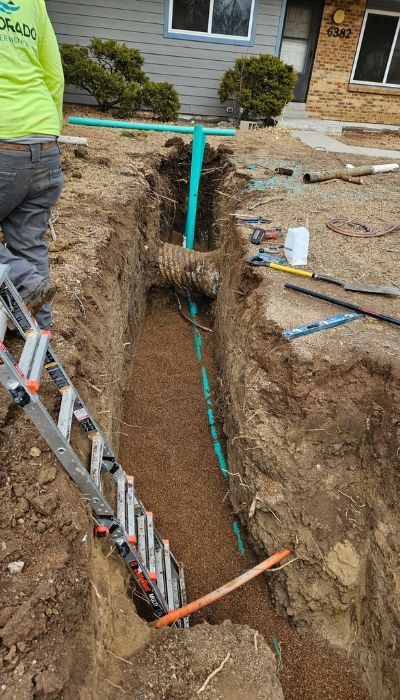
Many Denver homes built before 1980 still have clay, cast iron, or Orangeburg pipe running to the city main. These materials break down faster than modern PVC. When they fail, insurers often classify the damage as pre-existing deterioration — and deny the claim. Pipe age and material are two of the first things an adjuster looks at.


Denver's freeze-thaw cycles put consistent stress on those older lines. Ground that freezes and thaws repeatedly shifts and contracts around buried pipe. That movement cracks joints and collapses sections over time. But here's the coverage problem: because this damage builds slowly, it almost never qualifies as a sudden event.


Tree root intrusion is another common issue in older neighborhoods — Washington Park, Capitol Hill, Highlands. Mature trees send roots deep into lateral lines over decades. Most policies exclude root damage outright. So even if the root blockage causes a backup that floods your basement, getting a claim approved is an uphill fight.


The soil itself is a factor. Expansive bentonite clay is common across the Denver metro. When it absorbs water, it swells. When it dries out, it contracts. That movement shifts ground around buried pipes constantly — and most insurers exclude that as "earth movement." One thing we see constantly on Denver calls is clay pipe that's been slowly crushed or offset by soil movement over the years. By the time it fails, there's nothing sudden about it. The damage is years in the making, and the coverage window closed long before the homeowner knew there was a problem.


Denver neighborhoods with older pipe infrastructure to watch:

  • Washington Park
  • Capitol Hill
  • Highlands / LoHi
  • Congress Park
  • Baker
  • Whittier
  • Curtis Park

Sewer Line Endorsements and Add-On Coverage Options in Colorado

If your standard policy leaves a gap, a service line or sewer backup endorsement can fill part of it. These add-ons are available from most major Colorado insurers for a small annual premium — often $40–$100 per year. That's a low cost for meaningful protection if your home has older pipes.


A service line endorsement typically covers repair or replacement of underground lines that run from your home to the utility connection. A sewer backup endorsement covers damage from water or sewage that backs up through drains or overflows from a sump. Each has its own exclusions, so the details matter.


What these add-ons often exclude: pre-existing damage, tree root intrusion (varies by carrier), and pipes over a certain age. So if your lines are already in rough shape, you may have trouble getting a claim approved even with an endorsement in place.


To check if you already have this coverage, look at your declarations page. Search for the words "service line" or "sewer backup." If you don't see them, call your agent before you need to file a claim — not after.


3 Questions to Ask Your Insurance Agent Before Filing a Sewer Claim:

  1. Does my policy include a sewer backup or service line endorsement, and what does it exclude?
  2. Will the age or material of my sewer pipe affect whether a claim gets approved?
  3. If I file a claim that gets denied, does it affect my future premiums or renewability?

What Sewer Line Replacement Costs in Denver — With and Without Insurance

Even when insurance does pay, it rarely covers the full bill. Deductibles, caps, and exclusions leave gaps. And if you're paying out of pocket, the cost range for sewer line work in Denver is wide.


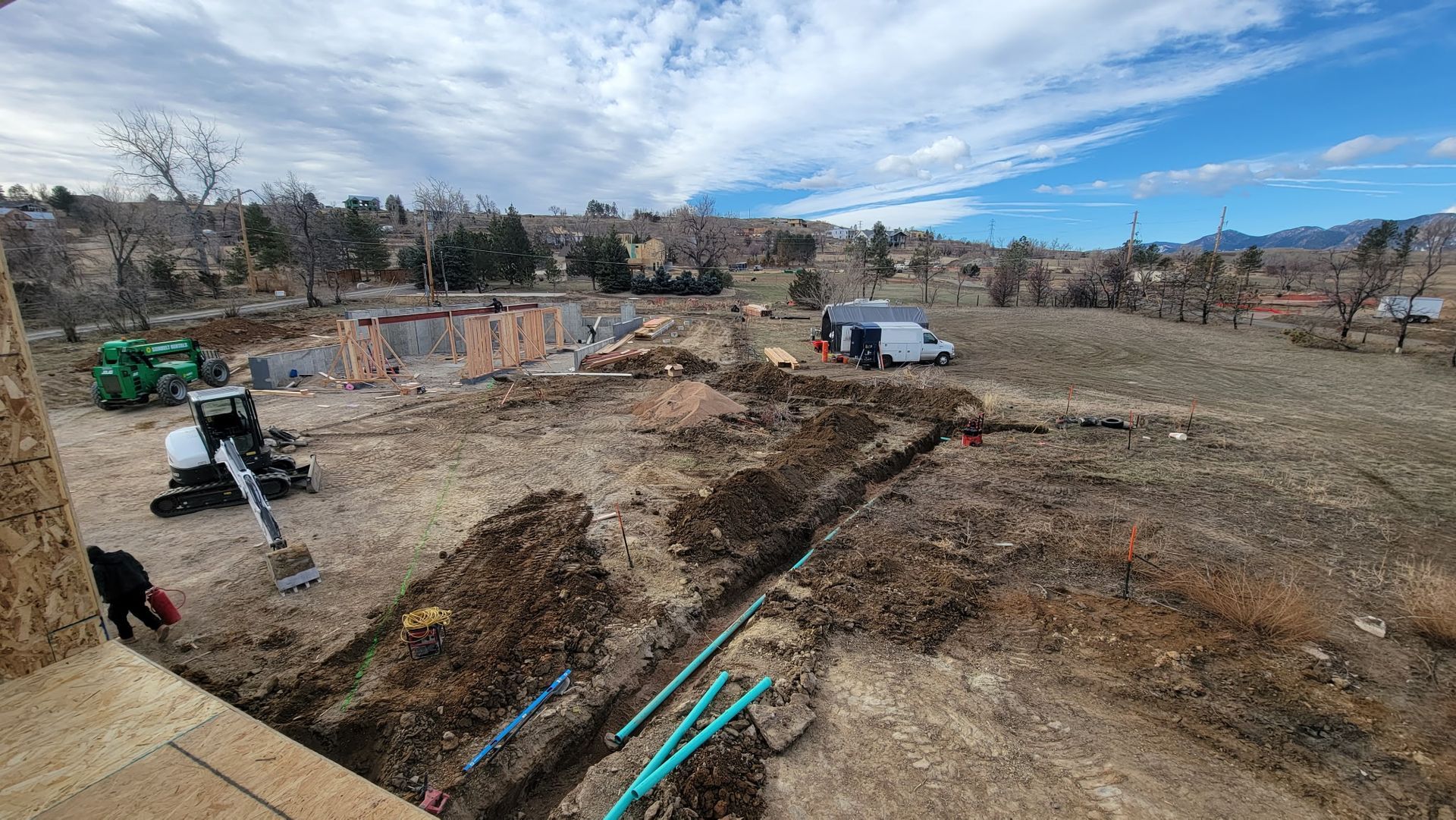
Traditional open-cut sewer line replacement — where a crew digs a trench from your house to the main — typically runs $3,000 to $25,000 or more in the Denver metro. The final number depends on depth, pipe length, and what gets damaged during excavation. Landscaping, driveways, and concrete sidewalks all add to the cost when they have to be cut up and restored. Denver permit and inspection fees add to the total as well, so factor those in when comparing estimates.


Trenchless sewer line replacement costs less for most jobs because the excavation is minimal. Instead of digging a full trench, trenchless methods — like pipe bursting or CIPP lining — work through small access points. That means less yard damage, faster turnaround, and often a significantly lower total price. A client in Arvada got an open-cut quote of $14,000. Our trenchless option came in under $7,500 — with no damage to the yard or driveway. That kind of difference matters whether insurance is paying or not.


Getting at least two estimates is worth the time. Prices across the Denver metro vary more than most homeowners expect.

Cost Factor Open-Cut Trenchless
Excavation / labor High Low
Landscape & hardscape repair Often significant Minimal to none
Job timeline Days to weeks Hours to days
Permit and inspection fees Required Required

What to Do Next If Insurance Won't Cover Your Denver Sewer Line

A denial from your insurer isn't the end of your options. But the next steps matter — both for protecting your home and for keeping your costs in check.


5 Steps Denver Homeowners Should Take After a Sewer Line Fails:

  1. Get a camera inspection first. A video scope of your sewer line documents the exact cause and location of the problem. That report is your evidence — for your insurer, your contractor, and any future dispute.
  2. Ask your insurer in writing what is and isn't covered. Do this before you authorize any repairs. A written response from your insurer is far more useful than a phone call when you need to appeal a denial.
  3. Get at least two estimates — including one for trenchless. Costs vary widely. A trenchless estimate takes time to get but can save you thousands compared to open-cut, especially in yards with landscaping or concrete.
  4. Ask your contractor if they can support your insurance claim. A good contractor can provide documentation, photos, and written findings that make it easier for adjusters to review your case. Ask upfront.
  5. Check for Denver utility assistance or financing options. Denver Human Services and Denver Water may have programs that help with unexpected utility repair costs. Ask about financing through your contractor as well — many offer payment plans for large jobs.


What homeowners don't realize is that the camera inspection report is one of the most valuable tools you have before calling your insurer. It shows the exact condition of the pipe, not just the symptoms. When you call with documentation in hand, you're in a much stronger position than if you're describing the problem from memory.


And if your policy won't cover it, Denver trenchless sewer line replacement is the most affordable path for most homes — faster, less disruptive, and lower cost than traditional excavation.


Call Colorado Water Works at (720) 320-6981 to schedule a camera inspection and get a free trenchless estimate.

Colorado Water Works
Phone: (720) 320-6981
Serving Englewood and the Denver Metro

Recent Posts

How to Spot a Trustworthy Plumber in Denver: Key Signs of Quality and Professionalism
July 13, 2026
Learn how to spot a trustworthy plumber in Denver CO. Check licenses, verify insurance, read reviews the right way, and avoid costly mistakes

toilet repair denver CO.
July 11, 2026
A toilet that runs all night can waste up to 200 gallons of water per day — and that's before the repair bill arrives. So if you're wondering how much does it cost to fix a toilet in Englewood, CO, you're asking the right question at the right time. Most Englewood homeowners deal with a broken toilet at least once. The problem is usually simple. But without a price range, it's hard to know if you're getting a fair deal or getting taken.  This guide covers real 2026 plumber pricing for toilet repairs in Englewood, CO — from a basic flapper swap to a full replacement. We'll walk through the most common problems, what drives costs up or down, when DIY makes sense, and how to pick a plumber you can trust. We're Colorado Water Works, and we're licensed and insured to serve Englewood and the greater Denver metro. We've handled enough toilet calls here to know what fair pricing looks like.
How to Repair a Sewer Line Without Digging: Trenchless Options for Denver Homes
July 10, 2026
Learn how trenchless sewer repair works in Denver CO. Colorado Water Works covers pipe lining, pipe bursting, costs, and how to find a licensed contractor.

DIY vs Licensed Denver Plumber | Colorado Water Works
July 7, 2026
Find out when DIY plumbing saves money in Denver and when hiring a licensed plumber is the smarter call. Colorado Water Works explains permits, costs, and risks.
How to Tell If Your Sewer Line Needs to Be Replaced: Key Warning Signs for Denver Homeowners
July 7, 2026
Learn the warning signs your sewer line needs replacing. Colorado Water Works helps Denver homeowners spot sewer problems early and avoid costly damage
How to Choose the Right Plumber in Englewood, CO: A Step-by-Step Guide
July 7, 2026
Learn how to choose the right plumber in Englewood, CO. Verify licensing, check reviews, get written estimates, and avoid costly red flags before you book.
Licensed plumber in Denver performing Trenchless Sewer Line Repair.
July 7, 2026
Learn what trenchless sewer repair costs in Denver, how long it takes, and what questions to ask before you hire. Colorado Waterworks covers every step.
What Is the Average Plumber Call-Out Fee in Englewood, CO?
July 6, 2026
Find out what plumber call-out fees cost in Englewood, CO — standard rates, emergency pricing, and what to ask before you book a local plumber in the Denver area.
How Much Do Plumbers Charge Per Hour in Denver?
June 19, 2026
Wondering what plumbers charge per hour in Denver, CO? Most residential jobs run $100–$200/hr. Get a fair, written estimate from Colorado Water Works.
CIPP Sewer Lining in Denver
By Gary Magill April 8, 2026
Discover benefits of CIPP sewer lining in Denver including trenchless pipe repair benefits, no excavation sewer repair, and eco-friendly sewer solutions.
Show More