
Trenchless Sewer Line Repair in Denver: Real Homeowner Experiences and What to Expect
You get a camera inspection report back and it shows a collapsed sewer line running under the backyard you just landscaped. Your first question is almost always the same: does the whole yard have to come up? For most Denver homeowners, the answer is no.
Trenchless sewer line repair in Denver has changed how we fix failing pipes — and most homeowners say the same thing after it's done: "I wish I'd known about this sooner." At Colorado Waterworks, every job starts with a camera inspection before we quote anything. No guesswork, no surprises.

This article walks through what trenchless sewer line repair actually looks like in Denver — the two methods we use, what it honestly costs, how long it takes, and how to pick a contractor you can trust. By the end, you'll have enough to take the next step with confidence.
What Should Denver Homeowners Expect During Trenchless Sewer Repair?
Most trenchless sewer repairs in Denver wrap up in one to two days. Here's what the process looks like:
- Camera inspection — A technician runs a camera through the line to find and document the damage.
- Method selection — We choose pipe lining (CIPP) or pipe bursting based on what the camera shows.
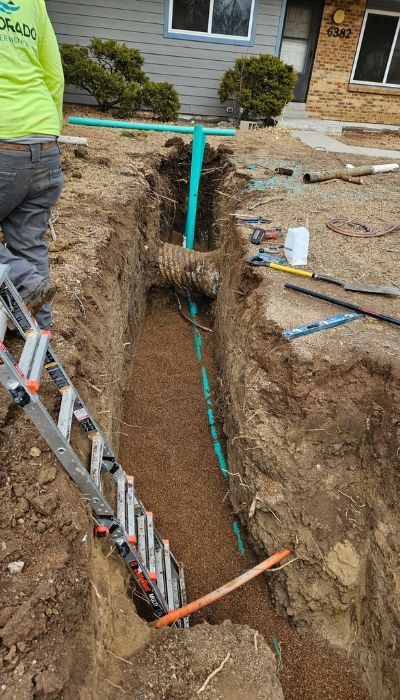
- Repair day — Access points are opened at each end of the damaged section. No trenching across your yard.
- Curing or pipe pull-through — The liner sets in two to four hours for CIPP, or the new pipe gets pulled through for bursting.
- Final inspection — A second camera run confirms the repair is solid.
Most homeowners report minimal disruption to their yard and daily routine.
Learn more about trenchless sewer line repair from Colorado Waterworks.
The Two Methods Denver Contractors Use (And Why It Matters)
Knowing the difference between the two trenchless methods helps you ask better questions and understand what your contractor recommends — and why.
CIPP Lining (Cured-In-Place Pipe)
A resin-soaked liner gets inserted into the damaged pipe. It's inflated to press against the pipe walls, then cured in place — heat, UV light, or ambient cure depending on the product. The old pipe stays where it is. The liner becomes a new pipe inside the old one.
CIPP works best when the host pipe is still mostly intact but has cracked, corroded, or been infiltrated by roots. The pipe needs to hold its shape well enough to support the liner during installation.
Pipe Bursting
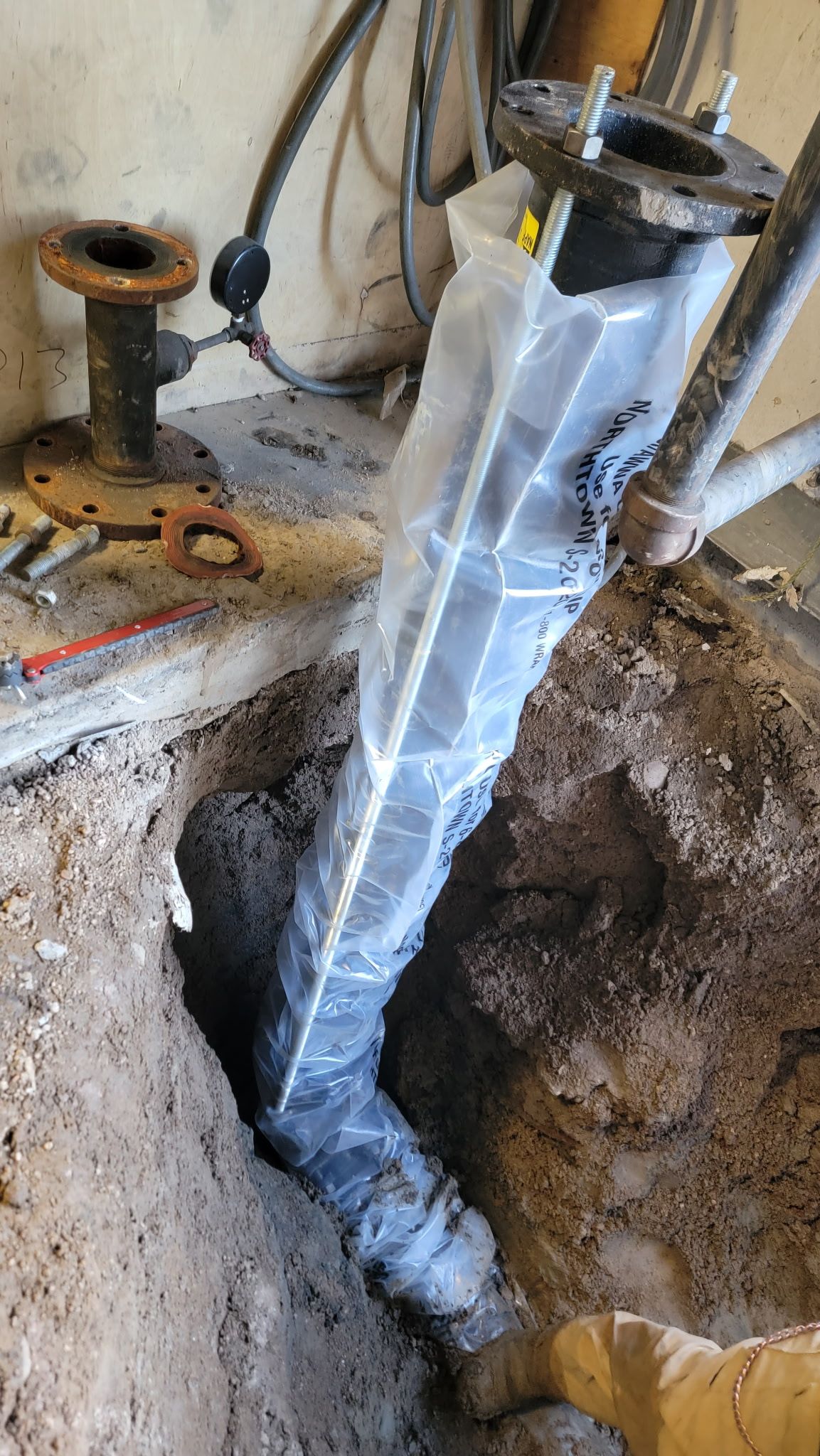
A bursting head gets pulled through the old pipe, fracturing it outward into the surrounding soil. A new pipe trails directly behind it, taking the place of the old one. This method works when the existing pipe is too far gone — collapsed, badly offset, or structurally compromised.

Which Method Fits Your Pipe?
Pipe material matters a lot here. Denver has a lot of older housing stock with clay and cast iron lines. Clay is common in pre-1970s neighborhoods and responds well to both methods. Cast iron is more common in mid-century homes and usually calls for CIPP if the pipe still has structural integrity. ABS plastic — more common in newer construction — is a different conversation.
| CIPP Lining | Pipe Bursting | |
|---|---|---|
| Best for | Cracked, corroded, or root-intruded pipe that still holds shape | Collapsed, offset, or severely deteriorated pipe |
| Time required | Same-day in most cases; liner cure adds 2-4 hrs | Same-day; no cure window needed |
| Yard disruption | Minimal - access points only | Minimal - access points only |
| Pipe size options | Wide range; works in tight spaces | Needs some soil clearance around the pipe |
One thing we see constantly on Denver calls: homeowners assume bursting is always faster because there's no cure wait. But if the pipe condition allows CIPP, lining is often the cleaner choice — especially in older Washington Park and Capitol Hill properties where the soil is tight and the access is difficult.
Real Denver Homeowner Scenarios — What Actually Happens
Knowing the methods is one thing. What does the day actually feel like? Here's what Denver homeowners describe.

Scenario A: Root Intrusion in Washington Park
An older home near Washington Park had clay sewer lines — original to the house. Roots had worked through a joint and were causing slow drains and occasional backups. The camera showed the pipe was still mostly round. CIPP lining was the call. The crew opened access at both ends of the damaged section, inserted the liner, and cured it. The homeowner went to work. The job was done before dinner.
Scenario B: Offset Joint in a 1970s Lakewood Ranch
A 1970s ranch in Lakewood had a joint that had shifted over the decades — enough that flow was restricted and sewage was starting to seep into the soil. The pipe was too far offset for a liner to seat correctly. Pipe bursting was the right move. New pipe went in the same day. The yard was untouched.
Scenario C: Condo Complex with No Dig Option
A multi-unit building had a failing shared lateral under a concrete courtyard. Traditional excavation would have meant tearing up the entire surface. Trenchless was the only real option. Access points were cut at each end, the liner was installed, and the courtyard stayed intact.
What homeowners don't realize is how fast the relief hits. The most common reaction we get after a trenchless job is surprise — not at the repair itself, but at how little the rest of their life was affected.
What Trenchless Sewer Repair Costs in Denver (Honest Numbers)
Denver Sewer Repair Timelines — Day by Day
Once you have a cost range in mind, the next question is always about time. Here's what a typical trenchless job looks like on the calendar.

- Morning — Camera inspection and method confirmation (1–2 hours): The technician runs the camera, reviews the footage, and confirms which method fits the pipe condition.
- Midday — Setup and access point opening (2–4 hours): The crew prepares the entry and exit points. No trenching — just targeted access at each end of the damaged section.
- Afternoon — Liner insertion or pipe bursting (1–3 hours): The active repair happens. CIPP liner gets inserted and inflated; or the bursting head gets pulled through and the new pipe follows.
- Cure window (CIPP only) — 2–4 hours or overnight: Depending on the liner product and conditions, cure time runs from a couple of hours to the next morning. The crew stays on-site or returns first thing.
- Final camera inspection — Same day or next morning: A second camera run confirms the liner is fully set and the pipe is clear. Sign-off happens here.
The Permit Variable
Denver metro permits can add one to five business days before the job starts. This is the most common reason a trenchless repair takes longer than homeowners expect — not the repair itself, but the waiting period before the crew can legally begin. Factor this into your planning if you're dealing with a slow drain rather than a full backup.
Once you know what the experience looks like, the next question is always about money.
Typical Cost Ranges in the Denver Metro
Cost data from Angi and HomeAdvisor puts CIPP lining in the range of $80–$250 per linear foot in most Denver metro jobs. Pipe bursting typically runs $60–$200 per linear foot. (Verify these figures with your contractor — local market rates shift, and your specific job conditions matter.)
A standard residential lateral runs 40–100 feet. That puts most trenchless jobs somewhere between $4,000 and $15,000 depending on the method, footage, and conditions.
What Moves the Price
- Linear footage — More pipe, more cost. Simple.
- Pipe diameter — Larger diameter lines need more material and equipment.
- Access difficulty — Tight access points, deep pipes, and confined spaces all add labor time.
- Permit requirements — Denver metro permits vary by municipality. Some add cost; most add time.
- Method selected — CIPP and pipe bursting price differently based on materials and equipment
The Number Homeowners Miss: Yard Restoration
Traditional excavation costs less per linear foot on paper. But yard restoration after a dig-and-replace job can add $2,000–$10,000 or more to the total — new sod, landscaping, concrete replacement, fence repairs. Trenchless skips most of that. The per-foot cost is higher; the total project cost is often lower.
Get a clear, camera-backed quote for trenchless sewer lines from Colorado Waterworks.
One cost factor that catches most Denver homeowners off guard: permits. Some Denver metro municipalities require a permit before any sewer work begins. That's not optional, and the processing time adds days to your start date — not to the repair itself, but to when the crew can legally show up.
How to Choose a Trenchless Sewer Contractor in Denver
Knowing the timeline helps. But so does knowing how to pick the right team.
Denver has no shortage of plumbing contractors. Not all of them approach trenchless sewer repair the same way — and some red flags are easy to spot if you know what to look for.
Contractor Checklist — 6 Questions to Ask Before You Hire
- Do you run a camera inspection before quoting? Any honest quote needs a camera report first. A contractor who quotes without one is guessing — at your expense.
- Can I see the inspection video? You should get the footage, not just a verbal summary. This protects you and documents the condition of the pipe before work starts.
- Are you licensed in Colorado? The state requires plumbing contractors to hold licensure through the Colorado Department of Regulatory Agencies (DORA). Ask for the license number. (Verify current requirements at dora.colorado.gov.)
- Which method do you recommend for my pipe, and why? A qualified contractor explains the reasoning — pipe condition, material, access, and cost trade-offs — not just the cheapest or fastest option.
- What does the warranty cover? Trenchless repairs should come with a written warranty on materials and workmanship. If it's verbal, it doesn't count.
- Is there any pressure to decide today? Same-day pressure with no camera report is a red flag. A legitimate contractor gives you time to review the inspection and make an informed call.

But the question that separates most contractors from the ones worth hiring: "What happens if the liner doesn't seat correctly?" The answer tells you whether they've actually run into that situation — or just read about it.
Why Denver Homeowners Choose Colorado Waterworks
Asking the right questions helps you filter fast — and Colorado Waterworks is built to pass every one of them.
We work in the Denver metro and we know the pipe stock here. Older clay lines, mid-century cast iron, 1970s construction with offset joints — we've seen all of it. We know what these pipes do in Denver soil, through Denver winters, and after decades of tree root pressure.
Every job starts with a camera inspection. You see the footage, you understand the condition, and you get a quote that reflects what's actually there. No guesswork, no surprises on the invoice.
Find us on Google, read what Denver homeowners say, and call or message us directly. We serve the full Denver metro and we're easy to reach.
And if you're not sure whether trenchless is the right call for your situation — ask us. That's what the inspection is for.
Ready to move forward? Explore
our
trenchless sewer line replacement &
trenchless sewer repairs
with Colorado Waterworks — camera inspection included.
Colorado Water Works
Phone: (720) 320-6981
Serving Englewood and the Denver Metro