
How to Tell If Your Sewer Line Needs to Be Replaced: Key Warning Signs for Denver Homeowners
Is that gurgling drain just a slow clog — or a sign your sewer line is failing? Most Denver homeowners don't find out until the problem is already serious. By then, what could have been a repair has turned into a full replacement.
Knowing how to tell if your sewer line needs to be replaced can save you thousands. It can also protect your yard, your foundation, and your home's plumbing from damage that compounds fast. Colorado Water Works serves the Denver metro area, and we see these warning signs play out the same way every time.
This article walks you through the top red flags, explains why Denver homes face higher risk than most, and helps you decide when to call for sewer line repair in Denver, CO.
What Are the Signs Your Sewer Line Needs Replacing?
Signs your sewer line needs replacing include:
- Multiple drains backing up at the same time
- Sewage smell inside the home or in the yard
- Wet, soft, or unusually green patches in the lawn above the sewer line
- Gurgling sounds from toilets or floor drains after flushing
- Recurring clogs that come back no matter how many times you clean them
- Foundation cracks or small sinkholes near the house
If you're seeing two or more of these at once, don't wait. Get a professional inspection. Sewer line repair, from Colorado Water Works can pinpoint the problem before it gets worse.
The Top Warning Signs Your Sewer Line May Need to Be Replaced
Sewer line problems almost never show up all at once. They build. One slow drain becomes two. A faint smell turns into something you can't ignore. By the time most homeowners call us, they've been dealing with symptoms for weeks.
Here's what to watch for:
- Multiple slow or backed-up drains. One slow drain usually means a local clog. But when the kitchen sink, the bathroom tub, and the basement floor drain are all sluggish at the same time, the problem is further down the line.
- Sewage odors indoors or outside. A healthy sewer system is airtight. If you're smelling sewage inside your home or near the yard, something is broken or cracked — not just clogged.
- Wet, sunken, or green patches in the lawn. A leaking sewer line feeds the grass above it. That lush strip running across your yard is not a coincidence.
- Gurgling from toilets or floor drains. That sound is air being pushed back through the system. It means something is blocking flow deep in the line.
- Recurring clogs. If you're having the same drain cleaned every few months and it keeps coming back, the clog is a symptom — not the problem.
One thing we see constantly on Denver calls is homeowners who've been living with two or three of these signs for months before picking up the phone. The longer you wait, the more of the line we have to replace.
Contact Colorado Water Works to schedule an inspection.
Why Denver Homes Are Especially Prone to Sewer Line Problems
Denver's housing stock is older than most people realize. Many homes in neighborhoods like Capitol Hill, Park Hill, Sunnyside, and Washington Park were built before 1960. The pipes under them were built then too — out of clay, cast iron, or in some cases orangeburg, a fiber-based pipe material that was never meant to last more than a few decades.
Colorado's climate makes things harder on those pipes. Freeze-thaw cycles put constant pressure on joints and fittings. When the ground freezes and expands, then thaws and shifts, pipes move. Over time, joints separate or sections crack.
And then there are the trees. Cottonwood trees are everywhere in Denver, and their root systems are aggressive. Roots find the smallest crack or joint gap in a sewer line and grow into it. And Denver's expansive clay soils hold moisture unevenly, which means roots and soil movement hit pipes from both sides.
| Denver Risk Factor | Why It Matters |
|---|---|
| Pre-1960 housing stock | Clay, cast iron, and orangeburg pipes past their lifespan |
| Freeze-thaw soil cycles | Shifts pipe joints and causes cracking |
| Expansive clay soils | Uneven ground pressure accelerates pipe failure |
| Cottonwood and large deciduous trees | Root systems target pipe joints for moisture |
| Aging municipal lateral connections | Original connections may not meet current standards |
Most of the time when we're scoping a line in Park Hill or Sunnyside, we find clay pipe with root intrusion at nearly every joint. That's not bad luck — that's just what happens to 70-year-old clay pipe under a big cottonwood.
What Causes Sewer Lines to Fail? (And How to Spot Each Cause)
Not every sewer line fails for the same reason. Knowing the cause matters because it changes what the fix looks like. Here are the most common culprits we find in Denver:
- Tree root intrusion — Roots enter pipe joints in search of water. Symptoms: recurring clogs, slow drains throughout the home, gurgling sounds.
- Corrosion and pipe age — Cast iron and clay pipes break down over decades. Symptoms: rust-colored water, frequent small leaks, persistent odor.
- Ground shifting — Colorado's wet/dry soil cycles cause pipes to move and joints to separate. Symptoms: multiple offset sections found on camera, sinkholes or soft spots in the yard.
- Grease and debris buildup — Grease coats pipe walls and traps debris over time until flow is almost completely blocked. Symptoms: very slow drainage across all fixtures, no visible yard signs.
- Pipe belly (sagging section) — A section of pipe loses support and dips, creating a low point where waste pools. Symptoms: frequent backups in the same spot, standing water in the cleanout.
But here's the thing: no symptom list fully replaces a camera. A scope inspection is the only way to confirm which of these is causing your problem. We run one before we recommend any repair or replacement — because guessing is how you end up fixing the wrong thing.
Sewer Line Repair vs. Replacement — How to Know Which One You Need
Not every sewer line problem requires a full replacement. Some do. Knowing the difference before you call a contractor can help you ask better questions.
When spot repair is usually enough:
- A single crack or offset joint in an otherwise solid line
- Root intrusion at one or two joints with the pipe structure still intact
- Minor joint separation in a pipe that's otherwise in good condition
When full replacement is usually required:
- Widespread corrosion along most of the line
- Pipe belly affecting a long stretch
- Collapsed or crushed pipe
- Orangeburg pipe that has softened and deformed
- Multiple failure points found during camera inspection
| Situation | Likely Solution |
|---|---|
| Single crack, pipe otherwise intact | Spot repair or CIPP liner |
| Root intrusion at a few joints | Hydro jetting + spot repair |
| Pipe belly over long stretch | Replacement |
| Widespread corrosion | Replacement |
| Full collapse | Replacement |
| Orangeburg deformation | Replacement |
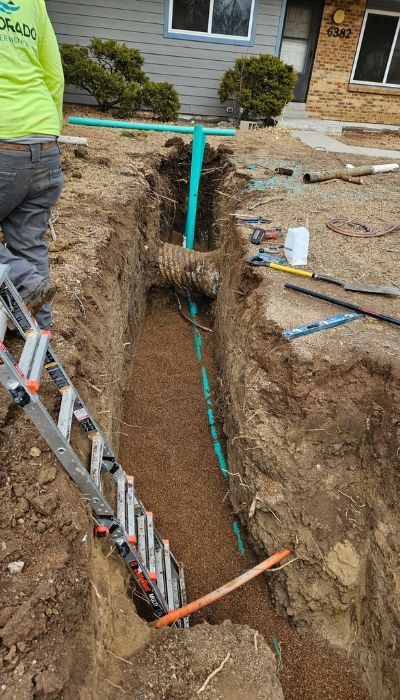
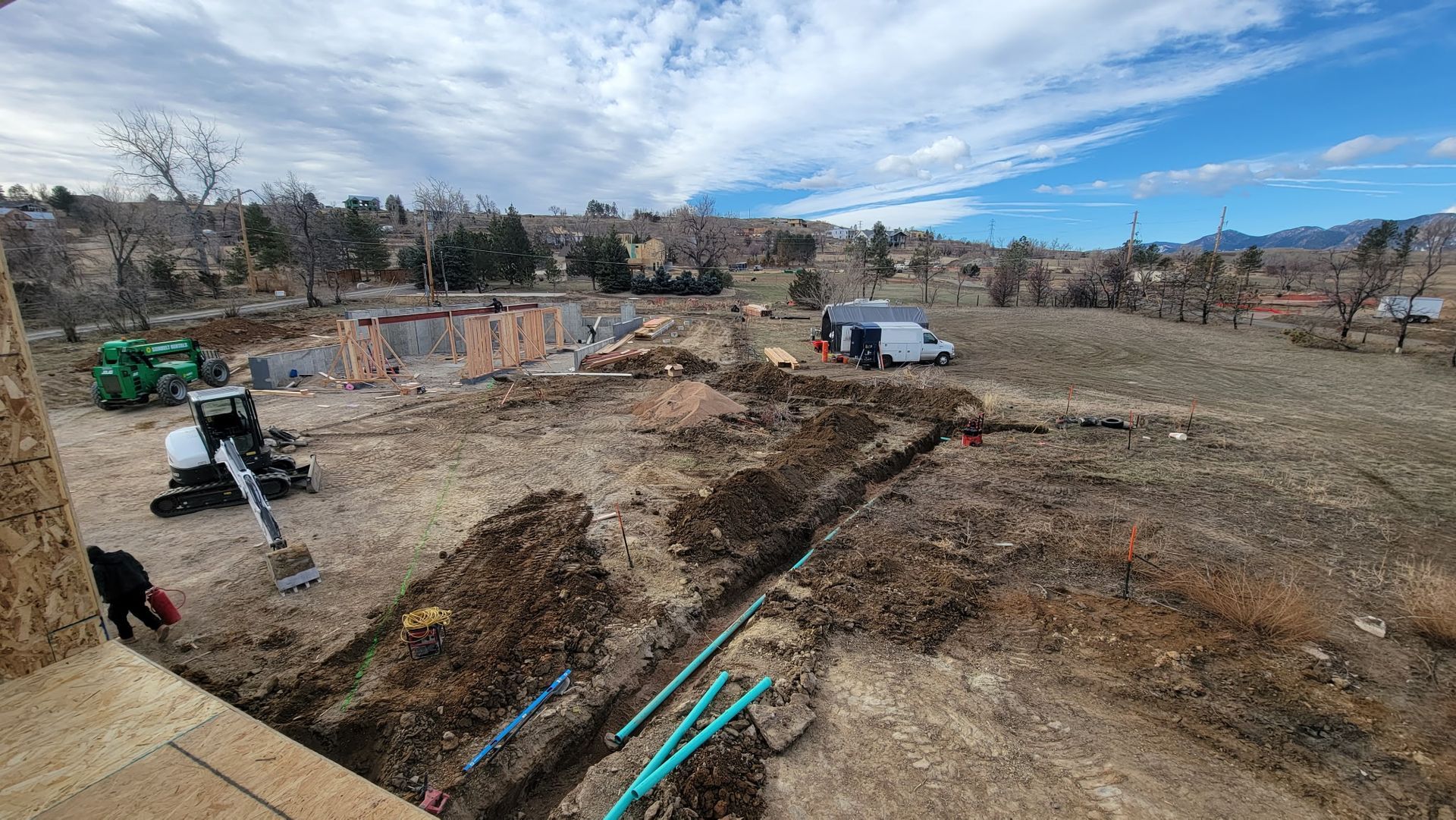
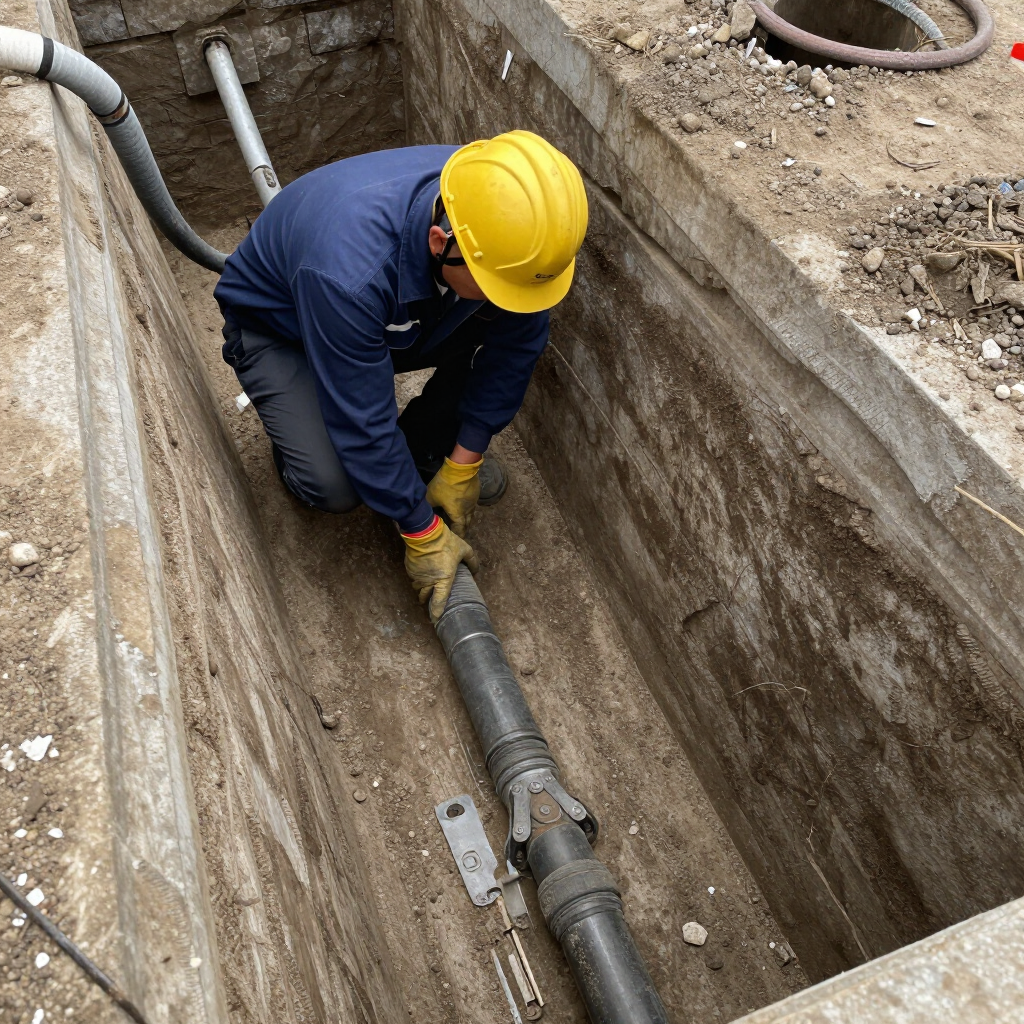
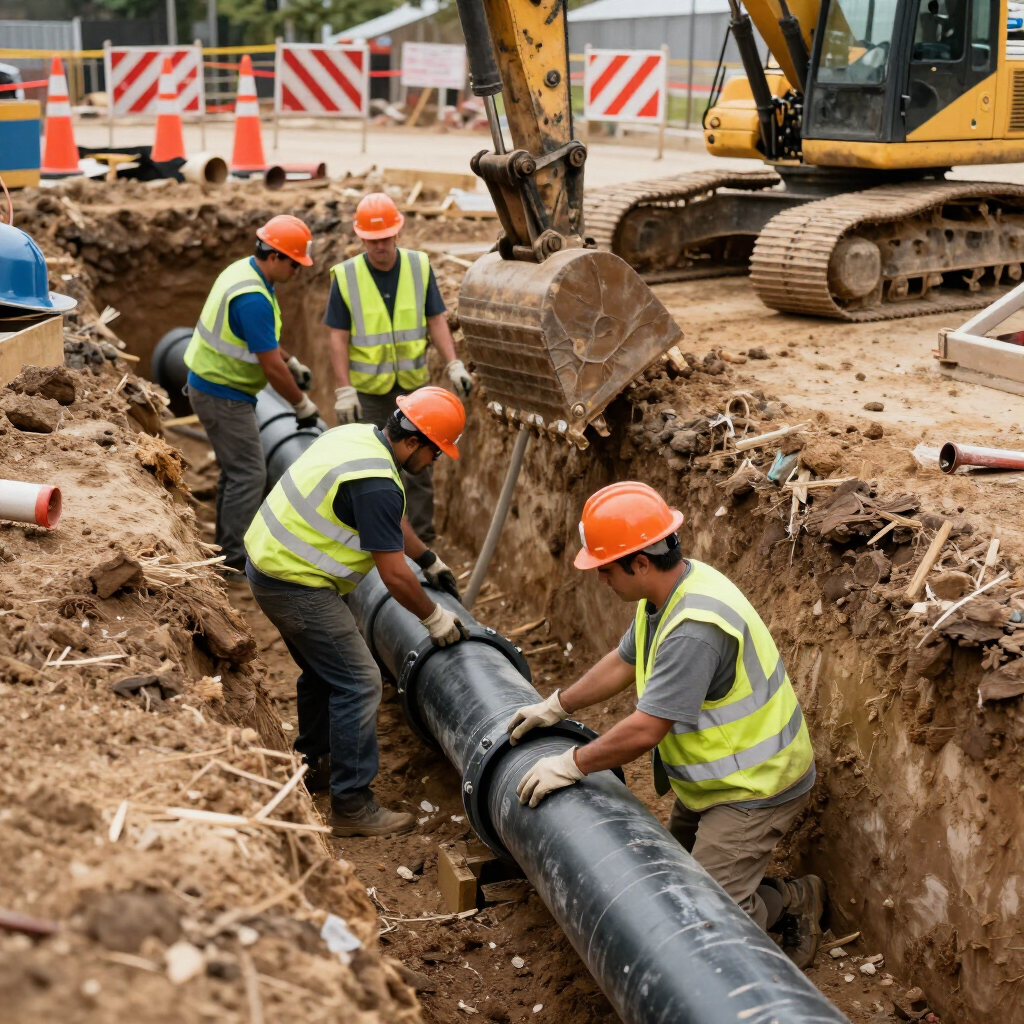
If replacement is needed, trenchless methods like CIPP lining or pipe bursting let us replace the line with minimal digging. Traditional open-cut excavation is still sometimes necessary — pipe depth, soil conditions, and access all factor in.
Cost depends on pipe material, how deep it's buried, and how much of the line needs work. A camera inspection gives you the data to make that call with confidence, not guesswork.
When to Call a Professional — And What to Expect
Some sewer problems can wait a few days for a scheduled appointment. Others can't.
Call same-day or treat as an emergency if you have:
- Sewage backing up into tubs, toilets, or floor drains inside the home
- A sinkhole or large soft spot forming in the yard
- Complete loss of drain function in multiple fixtures
For non-emergency signs — slow drains, occasional odors, recurring clogs — schedule an inspection soon. Don't let it sit for months.
What to have ready before you call:
- Your address and approximate age of the home
- Which drains are affected and how long the problem has been happening
- Whether you've had any recent drain cleaning or plumbing work done
- Whether there are large trees near the sewer line path
5 Questions to Ask Your Denver Sewer Contractor:
- Do you run a camera inspection before recommending repair or replacement?
- Are you licensed and insured in Colorado?
- Do you offer trenchless options, or is open excavation your default?
- What does the repair or replacement warranty cover?
- Will you provide a written estimate before any work begins?
One of our customers in Lakewood waited six months after noticing slow drains and a faint smell in the basement. By the time we scoped the line, roots had fully collapsed two sections. What could have been a targeted liner repair turned into a full line replacement. Catching it earlier would have cut the cost significantly.
Protect Your Denver Home — Take Action Before a Small Problem Becomes a Big One
The warning signs are real: multiple slow drains, sewage odors, wet patches in the yard, gurgling fixtures, and clogs that keep coming back. When you see more than one at a time, the sewer line is telling you something.
Acting early almost always means a smaller job and a lower cost. Waiting turns a repair into a replacement. In Denver's older neighborhoods — where aging pipes and cottonwood roots are a fact of life — that window closes faster than most people expect.
So don't wait until you have sewage in the basement. If something seems off, get it scoped. You'll know exactly what you're dealing with.
You can check Colorado Water Works on Google to read reviews, confirm our service area, and see our current hours before you call.
Ready to find out what's going on with your line? Colorado Water Works serves the Denver metro area. Call us at (720) 320-6981.
Frequently Asked Questions
How do I know if my sewer line needs to be replaced or just repaired?
A camera inspection is the only reliable way to tell. If the damage is isolated — one crack, one root entry point — repair is usually enough. If the pipe has widespread corrosion, multiple failure points, or a pipe belly over a long stretch, replacement is the better long-term fix.
What does a broken sewer line smell like?
A broken sewer line smells like rotten eggs or raw sewage, and the odor tends to show up in multiple places — inside the home near drains and outside in the yard above the line. A smell from just one fixture usually points to a dry trap, not a broken line.
Can tree roots really destroy a sewer line?
Yes. Roots enter through small cracks or joint gaps and grow inside the pipe over time, eventually blocking flow or splitting the pipe open. In Denver, cottonwood trees are especially aggressive, and clay pipe joints give roots an easy entry point.
How long does a sewer line inspection take?
Most camera inspections take one to two hours. That includes running the scope, locating the line, and reviewing the footage with you. We give you a clear picture of what's there before recommending anything.
What is trenchless sewer line replacement?
Trenchless replacement replaces or rehabilitates your sewer line with minimal digging. Methods like CIPP lining insert a resin-coated liner into the existing pipe, which hardens in place. Pipe bursting pulls a new pipe through the old one, breaking it apart as it goes. Both methods save your yard compared to open-cut excavation.
How much does sewer line replacement cost in Denver?
Cost depends on pipe depth, length, material, and access. Trenchless methods typically cost less in restoration work since there's minimal excavation. The best way to get an accurate number is to have the line scoped first — that removes the guesswork for both sides.
Colorado Water Works
Phone: (720) 320-6981
Serving Englewood and the Denver Metro